From Tokyo Streets to New York Runways: How Japanese Aesthetics Are Rewriting American Fashion
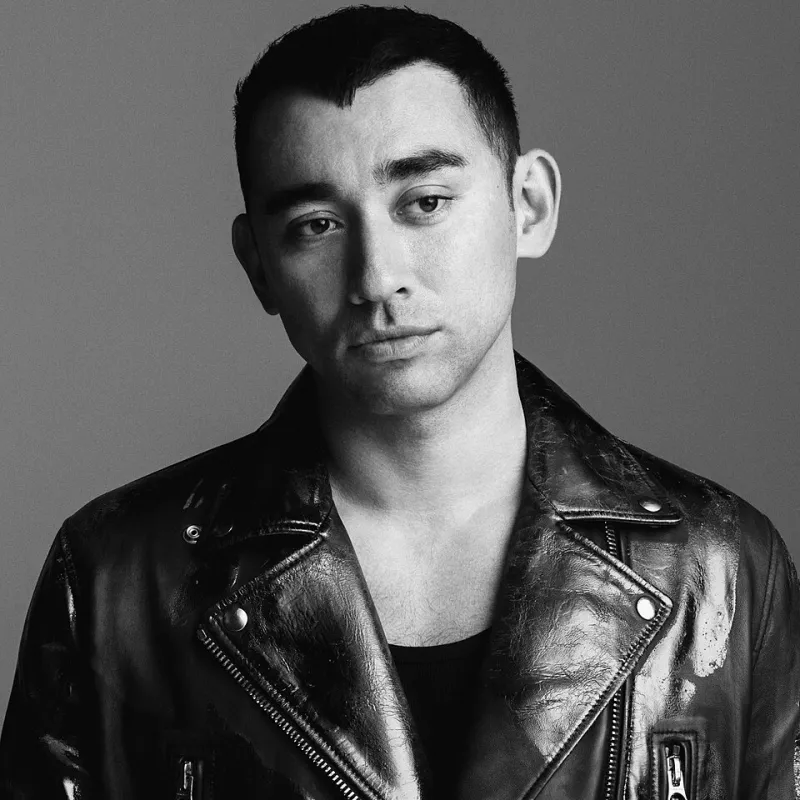
Photo: Nicola Formichetti, CC BY-SA 2.0, via Wikimedia Commons
There's a moment that keeps happening at fashion weeks across the US. A model walks out in something that feels simultaneously ancient and futuristic — clean lines, unexpected layering, a color palette borrowed from a woodblock print or a Studio Ghibli background. The audience reaches for their phones. The look goes viral. And somewhere in the DNA of that outfit is Japan.
It's not a coincidence. Over the past several years, Japanese design philosophy has moved from niche appreciation to genuine mainstream influence in American fashion. And honestly? It makes complete sense when you look at what's driving it.
The Philosophy Behind the Look
Before we talk runways, it helps to understand what makes Japanese design different. Western fashion has historically leaned into maximalism — more color, more volume, more statement. Japanese aesthetics, particularly those rooted in concepts like wabi-sabi (finding beauty in imperfection) and ma (the meaningful use of negative space), operate on a different frequency entirely.
Designer Yohji Yamamoto once described his work as "a conversation with the void." That might sound abstract, but you feel it immediately when you see a Yamamoto silhouette — there's intention in every fold, every absence of embellishment. This isn't minimalism for minimalism's sake. It's minimalism as a form of respect: for the fabric, for the wearer, for the craft itself.
American designers are paying attention. Brands like Telfar and Eckhaus Latta have openly cited Japanese streetwear and workwear traditions as touchstones. Meanwhile, stylists working with major US celebrities are increasingly pulling from labels like Sacai, Issey Miyake's Pleats Please line, and even vintage Comme des Garçons to create looks that photograph beautifully and hold up to scrutiny in person.
Anime as a Gateway — and a Full-On Door
Let's be real: for a lot of Gen Z consumers, the entry point wasn't a fashion magazine. It was anime.
Shows like Demon Slayer, Jujutsu Kaisen, and My Hero Academia introduced millions of young Americans not just to Japanese storytelling, but to an entire visual vocabulary. The intricate patterns on a character's haori. The way a villain's outfit communicates their entire personality through silhouette alone. The recurring motifs — cranes, waves, chrysanthemums — that carry centuries of cultural meaning.
Fashion influencer and stylist Kenji Watanabe, who splits his time between Los Angeles and Osaka, put it plainly in a recent conversation: "Anime taught a generation to read clothing. They understand that what you wear tells a story. That's a very Japanese idea, and now it's a very Gen Z idea."
That literacy has translated into real purchasing behavior. According to retail analytics firm Edited, searches for "Japanese streetwear," "harajuku style," and "anime-inspired fashion" on US platforms have grown by triple digits over the past three years. Brands like Uniqlo — which has always carried Japanese design DNA in its bones — have seen explosive growth in the American market, with collaborations with artists like KAWS and Mame Kurogouchi selling out within hours.
High Fashion Takes Notice
It's not just streetwear. The influence has climbed all the way to the top of the fashion pyramid.
At New York Fashion Week, you'd be hard-pressed to walk through a showroom without spotting something that owes a debt to Japanese craftsmanship. Asymmetrical hemlines drawn from traditional kimono construction. Garments that feature hand-stitched sashiko embroidery techniques. Outerwear with the boxy, deliberate structure of a noragi jacket.
Rei Kawakubo, the founder of Comme des Garçons, has been doing this work for decades — but American fashion is finally catching up to what she was saying all along. Her 2017 Met Gala retrospective at the Metropolitan Museum of Art introduced her radical approach to an entirely new audience, and the ripple effects are still being felt.
Stylist and fashion consultant Maya Lin (no relation to the architect) works with a roster of American celebrities and says the shift is undeniable. "Five years ago, I'd have to explain to a client why a Junya Watanabe piece worked," she said. "Now they're coming to me asking for it specifically. The education has already happened."
Craftsmanship in an Era of Fast Fashion
There's a deeper reason this resonates right now, and it goes beyond aesthetics. American consumers — particularly younger ones — are increasingly disillusioned with fast fashion's disposability. They want clothes that mean something. Clothes that last.
Japanese manufacturing traditions, from the hand-dyeing techniques of Kyoto's nishijin weavers to the indigo-dyed denim coming out of Kojima in Okayama Prefecture, represent everything fast fashion is not. These are garments made with patience, with expertise passed down through generations, with materials chosen for longevity rather than price point.
Brands like Kapital, Engineered Garments, and Visvim have cultivated devoted American followings precisely because of this ethos. A Visvim boot isn't just a boot — it's a document of craft. And in a marketplace flooded with disposable product, that kind of intentionality stands out.
What's Next
The conversation between Japanese and American fashion isn't slowing down — it's getting more nuanced. We're moving past the phase of simple borrowing and into genuine collaboration. American designers are apprenticing with Japanese artisans. Japanese brands are opening flagship stores in cities like New York, LA, and Chicago. And a new generation of Japanese-American designers — people who hold both cultural identities simultaneously — are creating work that doesn't choose between the two.
For those of us at Matsumoto Rio who've been watching this intersection for years, it feels like a long-overdue recognition. Japanese artistry has always had something profound to say to the world. The world is finally dressed to listen.