Money Meets Culture: How Japan's Entertainment Machine Is Making Netflix and Amazon Beg for More

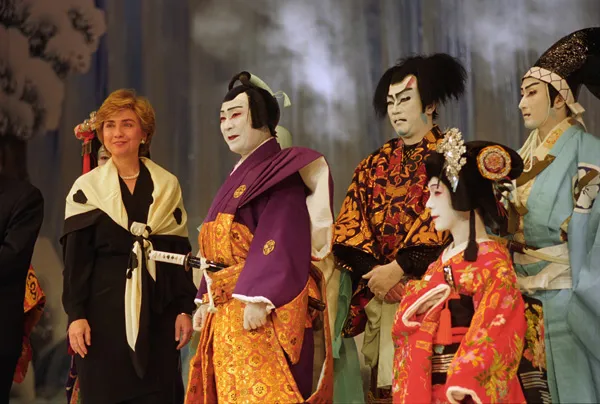
Photo: 『世界畫報』昭和十二年二月號 / Sekai Gahō February 1937 issue, Public domain, via Wikimedia Commons
There's a moment in any negotiation where one side realizes they want something more than the other side needs to give it. For years, that moment belonged to Hollywood. American studios, streaming platforms, and talent agencies held the cards, and everyone else — including Japan — played by their rules. But somewhere between the global explosion of Demon Slayer, the quiet dominance of Studio Ghibli on Netflix, and the overnight sensation of live-action adaptations like One Piece, that dynamic started to crack. And now? Japan's entertainment industry is sitting at the table with a very different hand.
Let's talk about what's actually going on behind the scenes — because the economics here are genuinely fascinating, and they say a lot about where global entertainment is heading.
The Numbers Don't Lie
Anime alone is a staggering business. The global anime market was valued at over $25 billion in 2023, and analysts project it could surpass $60 billion by the early 2030s. A huge chunk of that growth is being driven by American audiences — specifically, younger viewers who grew up on Cartoon Network's Toonami block and then migrated to Crunchyroll, Funimation, and eventually mainstream platforms like Netflix and Amazon Prime.
That audience appetite gave Japanese production companies something they hadn't always had: leverage. When Netflix came knocking to license Attack on Titan or commission original anime content, they weren't doing Japanese studios a favor anymore. They were chasing a proven product with a built-in, passionate global fanbase. The licensing fees reflected that shift. Deals that might have been modest five or ten years ago are now reportedly reaching into the tens of millions of dollars per title, with some major franchises commanding exclusive arrangements that rival what American prestige dramas cost to produce.
Why Streaming Giants Can't Quit Japan
Here's the thing about anime and J-dramas that makes them uniquely valuable to a platform like Netflix: they perform well across wildly different demographics and regions simultaneously. A single anime title might trend in the US, Brazil, France, and Indonesia all in the same week. That kind of cross-border appeal is something Hollywood blockbusters spend hundreds of millions trying to manufacture — and often fail at.
Japanese content, by contrast, tends to carry its cultural specificity as a feature, not a bug. Viewers aren't watching Jujutsu Kaisen or Alice in Borderland despite the fact that they're distinctly Japanese — they're watching because of it. That authenticity is a selling point, and American streaming executives have caught on.
Amazon Prime Video made a notable move by investing heavily in anime through its relationship with various Japanese studios, positioning itself as a serious competitor to Netflix in the space. Meanwhile, Netflix has leaned into Japan so aggressively that it now operates a production hub in Tokyo and has co-produced dozens of original Japanese-language series and films. These aren't licensing plays anymore — they're long-term infrastructure investments.
The Negotiation Game Is Getting Sophisticated
What's changed most noticeably in recent years is how Japanese entertainment companies approach these deals. Historically, there was a tendency — partly cultural, partly structural — to accept the terms that foreign buyers brought to the table. That's shifting in a meaningful way.
Major agencies and production houses in Japan have started hiring international business development teams, bringing in attorneys and dealmakers with experience in Hollywood contracts. They're negotiating not just licensing fees, but creative control clauses, sequel rights, merchandise revenue splits, and first-look deals that keep future projects in-house until the right offer comes along. Some companies have even begun developing English-language marketing strategies for their properties before they hit streaming — essentially pre-selling the cultural story to American audiences through social media before any deal is signed.
It's a level of strategic sophistication that would have seemed unusual even a decade ago, and it's paying off.
Talent Is Part of the Package
Beyond content, there's another dimension to Japan's entertainment economy that's starting to register in the US: individual talent. Japanese actors, directors, and musicians have historically had limited crossover into American markets outside of niche circles. That's changing, albeit gradually.
The success of performers who bridge both worlds — whether through international co-productions, cross-cultural tours, or social media presence — has shown studios and agencies that Japanese talent can carry global projects. Directors like Makoto Shinkai (Your Name, Suzume) now have name recognition among American film fans that rivals many domestic directors. That name recognition translates to box office and streaming numbers, which translates to negotiating power.
For those of us who care deeply about what it means for Japanese artistry to find its footing on a world stage, this is meaningful. It's not just about commerce — though the commerce matters. It's about whose stories get told, and on whose terms.
What American Audiences Are Actually Asking For
It's worth pausing to appreciate how much American viewer tastes have evolved. The idea that US audiences would only watch content dubbed into English, or that subtitles were a dealbreaker, has been thoroughly dismantled — first by Parasite winning Best Picture, and then by the sustained success of foreign-language content on every major streaming platform.
Japanese content has benefited enormously from this shift. And interestingly, it's helped create a feedback loop: the more quality Japanese content American audiences consume, the more culturally fluent they become, which makes them more receptive to nuanced storytelling, complex characters, and narrative structures that differ from the Hollywood formula. Streaming platforms have noticed, and they're commissioning accordingly.
The Bigger Picture
What we're watching unfold is something genuinely historic in the entertainment business. For most of the 20th century, American pop culture moved outward — Hollywood exported its films, its music, its fashion, and the rest of the world largely received them. The 21st century is running a different play. Cultural influence is flowing in multiple directions at once, and Japan — with its rich performance traditions, its innovative visual storytelling, and its deeply specific aesthetic sensibility — is one of the most powerful currents in that new flow.
Netflix and Amazon aren't fighting over Japanese content because they're being generous or culturally curious. They're fighting over it because their subscribers are demanding it, their algorithms are rewarding it, and the financial returns are justifying every dollar spent. That's not charity — that's market logic. And for Japan's entertainment industry, it represents an opportunity to shape global culture on their own terms in a way that simply wasn't available before.
The table has changed. And Japan pulled up its own chair.