The Closed Door Policy: How Japanese Performers Build Fanatical Loyalty by Sharing Almost Nothing
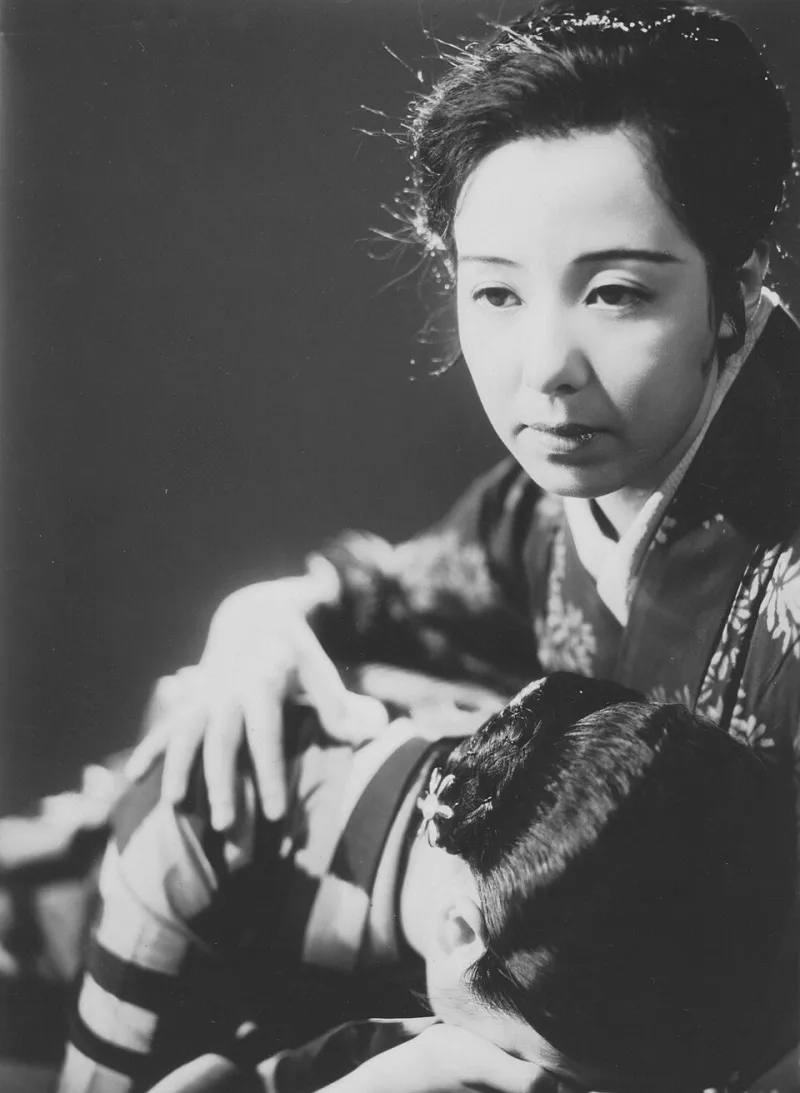
Photo: Shōchiku, Public domain, via Wikimedia Commons
There's a moment in almost every American celebrity interview where the host leans in and asks the question that signals we've arrived at the good stuff: "So what's really going on with you?" The expectation is confessional. Tears, ideally. A revelation about a difficult childhood or a recent heartbreak. We've been trained — by reality TV, by Instagram Stories, by decades of tabloid culture — to believe that raw, unfiltered access equals authentic connection.
Japanese performers have largely ignored this playbook. And somehow, they've ended up with fans who are arguably more emotionally invested, not less.
This isn't an accident.
The Paradox at the Center of Japanese Fame
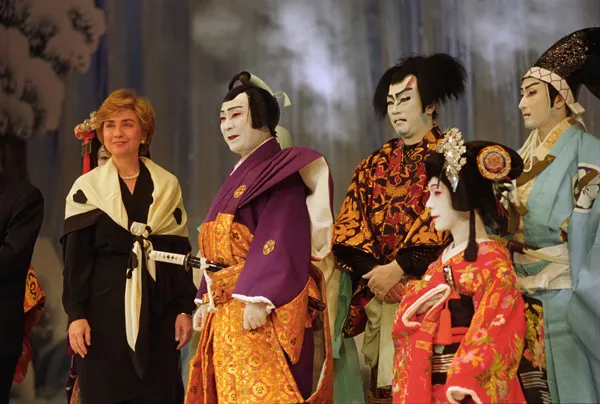
When you watch a Takarazuka Revue performer take the stage, you're watching someone who has spent years cultivating a persona that exists almost entirely within the theater. Their private life? Largely off-limits. Their romantic history? Almost never discussed. Their opinions on anything outside their craft? Rarely volunteered. And yet the devotion their fans demonstrate — the handwritten letters, the years-long attendance records, the genuine emotional investment — puts most Western celebrity fandoms to shame.
Dr. Pamela Chen, an entertainment psychologist based in Los Angeles who has consulted for both American and Asian media companies, describes what's happening as "projection space." When a performer shares less, fans unconsciously fill in the gaps with versions of that person that feel personally meaningful. "The brain is a storytelling machine," she explains. "Give it an incomplete picture and it will complete that picture using material from its own emotional life. Suddenly the performer isn't just a stranger — they're a mirror."
This isn't manipulation. It's a fundamentally different philosophy about what intimacy between performer and audience actually means.
Controlled Disclosure vs. Oversharing: A Study in Contrasts
Consider what happens when American celebrities go the other direction. The past decade of social media has turned celebrity culture into a kind of constant emotional open house. Every breakup is processed publicly. Every political opinion is announced. Every bad day gets a tearful selfie. Initially, fans respond with warmth — they're just like us! — but the relationship often curdles. The more we know, the more we find to disagree with, to judge, to grow tired of.
Psychologists call this the "familiarity-breeds-contempt" problem, and it's been documented in relationship research for decades. There's a reason good therapists don't tell their clients about their own problems. Boundaries, counterintuitively, protect intimacy rather than preventing it.
Japanese entertainment culture seems to have internalized this truth at an institutional level. Idol groups operate under famously strict personal conduct guidelines. Stage actors maintain careful separations between their theatrical personas and their daily selves. Even in interviews, the most celebrated performers often redirect personal questions back toward their craft with a grace that feels almost choreographed — because it is.
The Architecture of Mystery
What makes this approach work isn't simply withholding information. It's about the careful architecture of what you do share.
Japanese performers tend to be extraordinarily open about their craft — the hours of practice, the physical and emotional demands of a role, the relationship between performer and character. This creates genuine intimacy around the work itself. Fans feel like insiders to the creative process without ever gaining access to the person's private life.
It's a distinction that Dr. Marcus Webb, a behavioral scientist at NYU who studies parasocial relationships, finds genuinely instructive. "What we're seeing is a kind of emotional precision," he told us. "The performer is essentially saying: I will let you all the way in here — gestures toward the stage — and nowhere else. That clarity is actually really psychologically satisfying for fans. They know exactly what they're getting and they trust the container."
Trust, it turns out, is the operative word. When fans believe a performer is being deliberate rather than evasive, the mystery reads as respect rather than distance.
What Western Entertainment Is Starting to Notice
There are signs that some corners of American entertainment are paying attention. The careful, almost theatrical personal branding of certain K-pop acts — many of which have been heavily influenced by Japanese idol culture — has introduced a generation of American fans to this dynamic. Groups like BTS or BLACKPINK share enormous amounts of content, but that content is almost always mediated, produced, intentional. The rawness is curated. The vulnerability is strategic.
The response from American audiences has been, to put it mildly, enthusiastic.
Some American performers have quietly adopted similar approaches. Certain actors known for their longevity and sustained cultural relevance have maintained famously private personal lives for decades — and their mystique is consistently cited as part of their enduring appeal. What Japanese performance culture makes explicit, these figures seem to have arrived at intuitively.
The Emotional Math of Less
Here's what the research keeps circling back to: human beings are wired to complete incomplete things. Psychologists call it the Zeigarnik effect — we remember and fixate on unfinished tasks far more than completed ones. An open loop demands our attention in a way that a closed one simply doesn't.
A performer who reveals everything closes every loop. There's nothing left to wonder about, nothing left to project onto, no story left to finish. A performer who reveals just enough — who gives you access to their artistry while keeping their humanity slightly out of reach — keeps every loop open. You keep coming back, not because you're frustrated, but because the relationship still feels alive and unresolved.
This is, in a very real sense, the same reason a great novel keeps you up past midnight while a mediocre one puts you to sleep. It's not about quantity of information. It's about the quality of the questions being left unanswered.
What This Means for How We Think About Fame
For anyone interested in performance, personal branding, or just the weird psychology of why we love who we love, Japanese performers offer a genuinely useful alternative model. Fame doesn't have to mean total exposure. Connection doesn't require confession. And sometimes the most powerful thing you can do for an audience is leave them with something to imagine.
In a media landscape that increasingly rewards the loudest, the most exposed, the most willing to burn it all down for content — that's a genuinely radical idea.
And it's been working in Japan for a very, very long time.