What Hollywood Is Finally Stealing from Japan's Most Ancient Stage Traditions
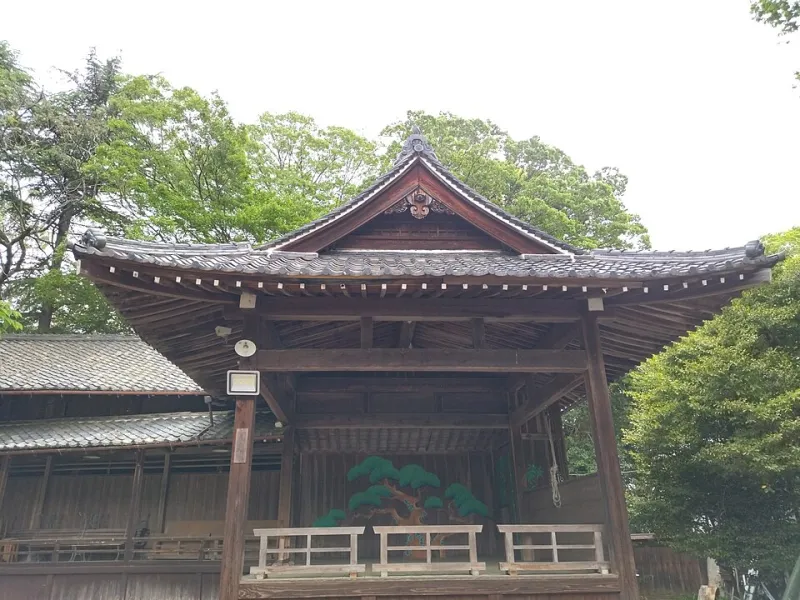
Photo: Shinji Enoki, CC BY-SA 4.0, via Wikimedia Commons
There's a moment in Noh theater — and if you've ever sat through a performance, you know exactly the one — where the actor simply stops. Not pauses. Stops. The audience leans in. The air gets heavy. Something enormous is happening, and yet nothing is moving. That charged, deliberate emptiness has a name in Japanese: ma. And right now, acting coaches from Los Angeles to Brooklyn are teaching it to a new generation of performers who are exhausted by the idea that bigger always means better.
American acting culture has long worshipped intensity. Think Al Pacino in full roar, or the tradition of Method acting that encouraged performers to drag their real-life trauma onto the stage and screen. Emotional explosion was the gold standard. But something has shifted. Audiences are overstimulated. Streaming has flooded the market with content. And in that sea of noise, the performer who can make you hold your breath with a single, perfectly weighted glance is the one who actually breaks through.
Japanese performance traditions have understood this for a very long time.
The Concept of Ma — and Why It Translates
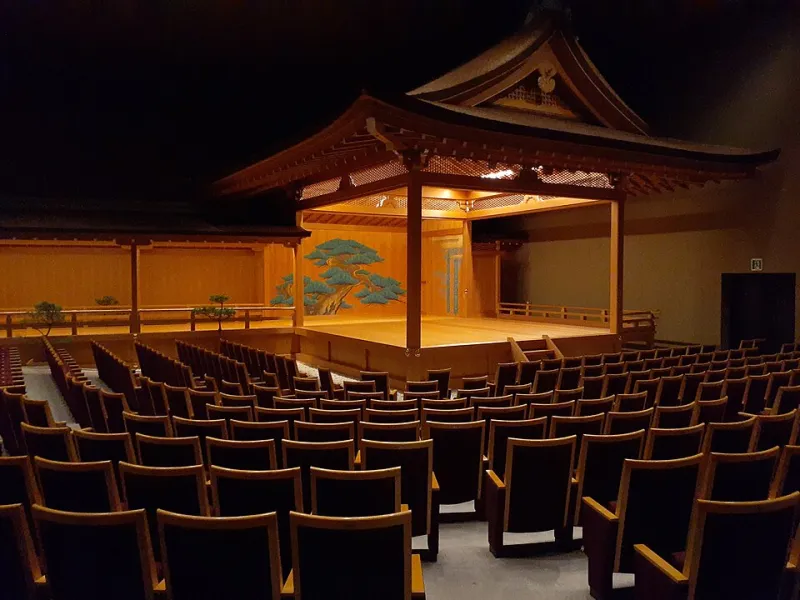
Ma is often translated as "negative space" or "pause," but those words don't quite capture it. It's closer to the idea that the space between actions carries just as much meaning as the actions themselves. In Noh theater, one of Japan's oldest dramatic art forms dating back to the 14th century, performers train for years — sometimes decades — to master the weight of stillness. Movement is minimal, deliberate, and loaded with intention. The mask worn by the lead actor isn't expressive in the conventional sense. The emotion lives in how the actor positions their body, how they tilt their head, how they choose to not move.
For Western actors trained in traditions that prize emotional availability and spontaneous reaction, encountering ma for the first time can feel almost counterintuitive. But acting coaches who've spent time studying in Japan say the concept clicks fast once students stop fighting it.
"The first thing I tell my students is that restraint isn't the absence of feeling," says one Los Angeles-based coach who spent three years studying Noh technique in Kyoto before returning to the US. "It's feeling that's been compressed. When you hold something back, the audience projects their own emotion into that space. You give them room to feel with you instead of just watching you feel."
That distinction — between performing emotion and creating the conditions for emotion — is exactly what's pulling Hollywood actors toward Japanese technique.
Kabuki's Gesture Vocabulary: Precision as Power
Noh isn't the only tradition making waves in Western training circles. Kabuki, the more theatrical and visually dramatic cousin of Noh, has its own lessons to offer — and they're about specificity rather than stillness.
Kabuki performance is built on a codified vocabulary of gestures, expressions, and poses called kata. Every movement means something exact. The angle of a wrist, the direction of a gaze, the specific curve of a hand — none of it is improvised or approximate. Actors inherit these forms from generations of predecessors and refine them over years of practice. The result is a kind of physical language so precise that a trained audience can read an actor's entire emotional state from across a large theater without a single word being spoken.
For film actors in particular, this level of physical specificity is gold. The camera doesn't miss anything. An imprecise gesture reads as clutter. A precisely loaded one reads as truth.
Rising indie actor Marcus Delray, who spent eight months in Tokyo training with a Kabuki instructor after landing a small role in a festival-circuit drama, describes the shift in his work as fundamental. "Before, I thought physical acting meant big gestures, taking up space. After training in Kabuki technique, I learned that every single part of my body is making a choice at every single moment. That awareness changed everything about how I move on camera."
Delray's performance in his most recent film drew comparisons to early Cate Blanchett — high praise for a 26-year-old — and several reviews specifically called out his "uncanny physical control."
The Oversaturation Problem and Why Restraint Wins Now
There's a broader cultural context here that's worth naming. American audiences in 2024 are drowning in content. Every streaming platform is packed. Social media has shortened attention spans while simultaneously creating a hunger for something that feels real rather than performed. In that environment, an actor who's visibly working hard to make you feel something can actually create distance. You see the effort. The seams show.
Japanese performance philosophy, at its core, is about eliminating the seams. The goal isn't to show the audience how skilled you are. It's to make them forget there's a performance happening at all — or alternatively, in the case of Kabuki, to make the performance so perfectly stylized that it transcends realism entirely and becomes something closer to ritual.
Both approaches demand a kind of ego-release that runs counter to a lot of Western actor training, which tends to center the performer's personal emotional experience. Japanese technique asks you to subordinate yourself to the form, to the role, to the audience's experience. It's a fundamentally different orientation.
"It's humbling," admits one actress who studied Noh movement as part of a year-long intensive in Japan. "You realize how much of what you thought was 'authentic acting' was actually just you showing off. Japanese technique strips that away completely."
What This Means for the Next Generation
Acting programs at places like NYU Tisch and the American Conservatory Theater in San Francisco have begun incorporating elements of Japanese physical theater into their curricula. Workshops specifically focused on ma and kata are popping up in Brooklyn, Silver Lake, and Chicago's theater district. The interest isn't just academic — it's driven by working actors who've noticed what's landing with audiences and directors.
For anyone paying attention to where performance is heading, the signal is clear. The era of emotional maximalism may not be over, but it's sharing the stage with something older, quieter, and in many ways more powerful.
Japanese theater has always known that what you don't say — what you don't do — can be the most devastating choice in the room. Hollywood is just now catching up.
And honestly? It's about time.