Crowded Rooms, Empty Hearts: How Japanese Performance Art Is Healing America's Loneliness Crisis
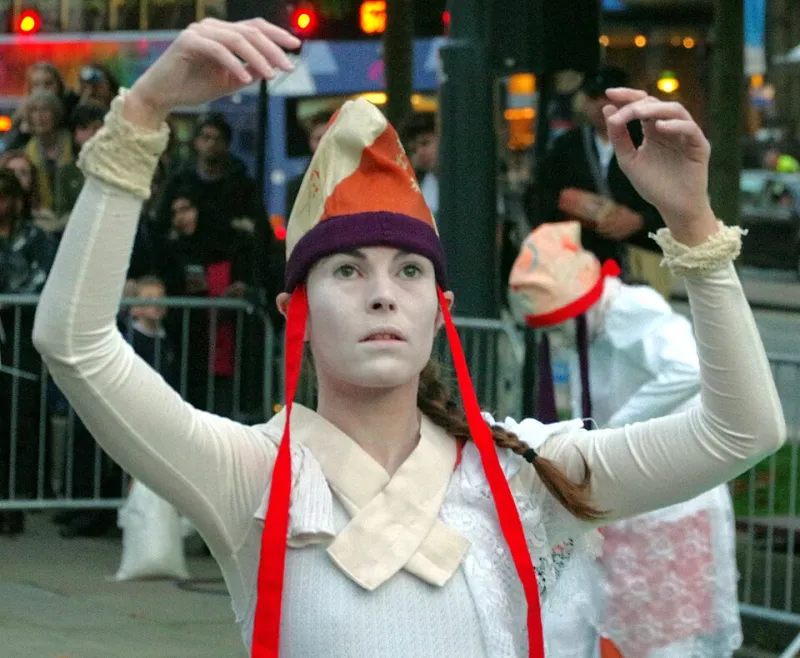
Photo: donald judge, CC BY 2.0, via Wikimedia Commons
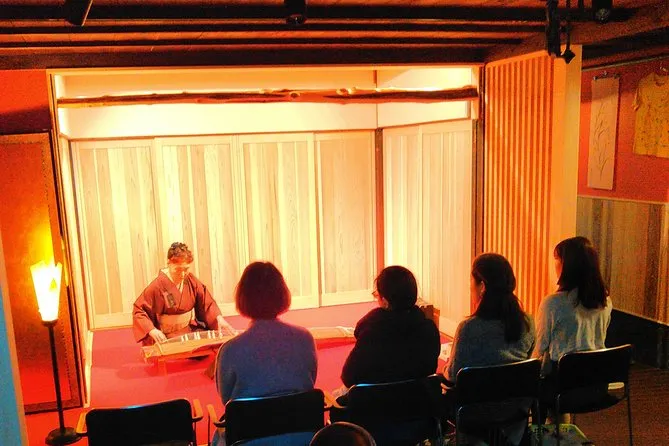
Something strange is happening in American cities. People who spend most of their days glued to screens, eating alone, commuting in earbuds, and texting instead of talking are voluntarily sitting in small, dark rooms together — watching a single performer move almost imperceptibly across a stage for forty-five minutes. No explosions. No punchlines. No intermission snack bar. Just breath, space, and the unbearable weight of being human.
And they're leaving those rooms changed.
Japanese performance traditions — from butoh's raw, unsettling physicality to the stripped-down emotional architecture of contemporary minimalist theater — are quietly filling venues from Brooklyn to Portland to Chicago. The audiences aren't primarily Japanese-American. They're regular Americans who stumbled into something they didn't know they needed. So what's actually going on here?
The Loneliness Numbers Nobody Wants to Talk About
Before we get into the art, let's sit with the reality it's responding to. The US Surgeon General declared loneliness a public health epidemic back in 2023, and the data backing that up is genuinely alarming. Something like half of American adults report measurable feelings of isolation. Young adults — the most digitally connected generation in history — are actually lonelier than their grandparents' generation was at the same age.
We've built incredible infrastructure for communication and almost none for genuine communion. There's a difference, and most of us feel it in our bones even if we can't name it.
This is the specific wound that Japanese performance traditions seem to reach.
What Butoh Actually Does to a Room
Butoh emerged in post-war Japan in the late 1950s as an act of cultural rebellion and grief. It was strange, confrontational, and deeply uncomfortable — performers moving at glacial speed, faces painted white, bodies contorted into forms that blurred the line between human and something older. It was never supposed to be pretty. It was supposed to be honest.
What butoh practitioners figured out early is that extreme slowness does something neurologically interesting to an audience. When there's nothing fast to track, no plot to follow, no jokes to decode, the viewer's nervous system starts to settle. Attention deepens. And then, almost involuntarily, people in the audience start to become aware of each other — the collective breathing, the shared discomfort, the occasional suppressed laugh or involuntary exhale.
A crowded theater watching a butoh piece isn't a collection of individuals having private experiences. It becomes, temporarily, a single organism. That's not poetic exaggeration — it's what audience members consistently report afterward. "I felt like I wasn't alone for the first time in months," one attendee at a recent New York performance described it. She'd come by herself.
Restraint as Radical Generosity
Here's the counterintuitive thing about Japanese minimalist performance: the less a performer gives you, the more space you have to bring yourself.
American entertainment is largely built on the opposite principle. We fill every second. We explain the joke. We underscore the emotional beat with music. We tell you exactly how to feel and when to feel it. It's efficient, and it's also kind of exhausting — and it leaves almost no room for the audience to actually participate in meaning-making.
Japanese theatrical traditions, whether we're talking about the influence of Noh's deliberate pacing or contemporary artists working in that lineage, operate differently. A performer holds a gesture just a beat longer than comfort allows. Silence stretches until it starts to feel like a physical presence. The audience is trusted — required, even — to complete the emotional circuit.
This is where the community-building happens. When you're in a room full of people and you're all collectively filling in the same silence, you're doing something together. You're co-creating the meaning of what you're witnessing. That shared act of imagination is genuinely connective in a way that watching the same Netflix show in separate apartments is not.
The Digital Disconnection Factor
It would be too easy to say that Japanese performance is simply an antidote to phones. But there's something real in that framing worth unpacking.
Digital connection is high-stimulus and low-risk. You can close the tab. You can mute the thread. You can curate exactly who sees you and when. It's connection with an escape hatch always available, which means it never quite requires you to be fully present.
Sitting in a theater watching a performer exist in real time, in real space, with real breath — that's something your nervous system registers differently. You can't mute it. You can't scroll past it. And crucially, other people are there, and they're not looking at you, which paradoxically makes it safer to feel things.
Several psychologists studying audience behavior have noted that live performance — particularly the slow, contemplative variety — activates a quality of attention that's become genuinely rare. It's not passive. It's a kind of focused receptivity that feels, to people who don't get much of it, like relief.
Why Japanese Artists Specifically?
Fair question. There's minimalist performance in Western traditions too — Samuel Beckett, experimental theater, plenty of avant-garde work that strips things down. So why does Japanese performance seem to be hitting differently for American audiences right now?
Part of it is probably the cultural distance itself. When you encounter an aesthetic tradition that comes from genuinely different philosophical soil — concepts like ma (the meaningful use of negative space) or mono no aware (the bittersweet awareness of impermanence) — it can bypass your usual defenses. You can't intellectualize your way out of it because you don't have the cultural shorthand to do so. You just have to feel it.
There's also something about the particular quality of Japanese restraint that reads as trustworthy to American audiences. It doesn't feel like withholding. It feels like respect — like the artist believes you're capable of handling the full weight of something without being managed through it.
What You Actually Find in That Room
The paradox at the heart of all of this is simple and a little devastating: the performances that create the most profound sense of shared experience are often the ones that look, from the outside, the most solitary.
One person. A stage. Silence. Fifty strangers holding their breath together.
What Americans are finding in those rooms isn't entertainment in the traditional sense. It's something closer to what used to happen around fires, in temples, at the edges of things that can't quite be explained. A reminder that being in a body in a room with other bodies is itself a kind of language — one that predates every app, every algorithm, every curated feed.
Japanese performance traditions didn't set out to solve America's loneliness crisis. They set out to tell the truth about what it means to be alive. It just turns out that right now, in this particular cultural moment, those two things are pointing at exactly the same place.