Cracked and Beautiful: What Japanese Artists Know About Imperfection That the Rest of the World Is Just Figuring Out
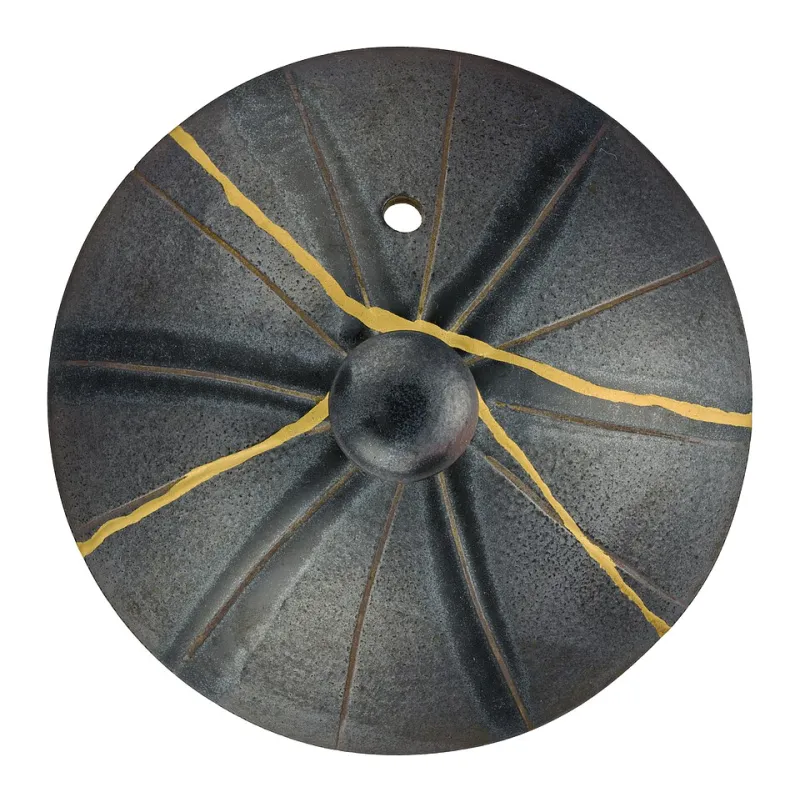
Photo: D-Kuru, CC BY-SA 4.0, via Wikimedia Commons
Imagine spending six months on a painting, and then — deliberately — leaving one corner bare. No accident, no deadline pressure. Just a conscious choice to stop before the thing is technically complete. For most American creators, that sounds like career suicide. For a growing number of Japanese artists, it's the whole point.
Wabi-sabi has been floating around design conversations for a while now, usually reduced to "rustic vibes" on Pinterest boards or "minimalist" apartment decor. But the real thing is so much stranger and more radical than that. It's a worldview that finds beauty specifically in what's broken, weathered, asymmetrical, and unresolved. And the way contemporary Japanese performers and visual artists are applying it right now is quietly rewiring how American audiences think about art — and about themselves.
What Wabi-Sabi Actually Means (It's Not What Your Interior Design Blog Told You)
The term pulls from two older Japanese words. Wabi historically referred to the kind of solitude you feel in nature — a little lonely, a little humbling. Sabi described the beauty that comes with age and wear, the patina on old metal, the way a wooden floor tells stories through its scuffs. Together, they describe an aesthetic that doesn't just tolerate impermanence — it actively celebrates it.
The most famous physical expression of this is kintsugi, the practice of repairing broken pottery with gold lacquer. The repaired cracks don't disappear; they become the most visually striking part of the object. The breakage is the story. A kintsugi bowl sitting on a shelf in a gallery in Brooklyn isn't just beautiful — it's an argument against the idea that damage needs to be hidden.
But wabi-sabi isn't just about objects. Japanese performers have been embedding this philosophy into live work for generations, and the contemporary wave of artists bringing their practice to US stages is making it impossible to ignore.
The Deliberate Unfinished
There's a specific technique in traditional Japanese ink painting called ma — the intentional use of negative space, of what's left out. A master painter might render a single branch with three brushstrokes and leave the rest of the canvas empty. Western eyes, trained to read empty space as absence or error, sometimes initially experience this as unsettling. Then something shifts, and the emptiness starts to breathe.
Contemporary Japanese performance artists are doing the same thing with time, sound, and narrative. A performer might leave a story thread genuinely unresolved — not as a cliffhanger, but as an invitation. The audience is meant to sit in the open question, not wait for the answer. American theatergoers who've grown up on three-act structure and tidy resolutions sometimes find this frustrating at first. Then, often, they find it kind of revelatory.
The discomfort is part of the design. Wabi-sabi aesthetics ask you to stop reaching for closure and just be in the moment of incompleteness. For a culture that treats "done" as the only valid state for anything — a project, a relationship, a renovation — that's actually a pretty radical ask.
Why American Perfectionism Is Costing Us Something
Here's the uncomfortable truth that wabi-sabi holds up like a mirror: the obsession with polish isn't just an aesthetic preference. It's anxiety dressed up as standards.
The music is mixed until every breath is edited out. The Instagram post gets filtered until the light looks like a movie set. The script gets workshopped until all the rough edges are gone — along with, sometimes, all the life. American creative culture has built an entire infrastructure around the idea that visible effort is embarrassing and imperfection is failure.
What gets lost in that process is texture. Authenticity. The feeling that a real human being made this thing and their fingerprints are still on it.
Japanese artists working in this tradition aren't sloppy — that's the misconception worth clearing up immediately. The deliberate imperfection requires enormous skill and intention. Knowing where to leave the crack, which silence to hold, how to let a piece trail off rather than conclude — that's a craft in itself. It takes more control, not less, to stop before the culturally expected finish line.
What Audiences Are Actually Responding To
Something interesting is happening at galleries and performance spaces across the US when Japanese artists bring wabi-sabi-informed work into the room. Audiences who can't quite articulate what they're responding to often reach for words like "real" and "honest." They say things like, "It felt like it trusted me."
That last one is worth sitting with. When a piece of art leaves space — literal or metaphorical — it extends a kind of trust to the audience. It says: you're capable of meeting this halfway. You don't need everything explained. You can handle ambiguity.
In an era of content that's been A/B tested and algorithm-optimized to within an inch of its life, that trust feels almost shockingly respectful. American audiences are responding to it the way you respond to someone who actually listens instead of just waiting to talk.
The Creative Permission Slip
For American creators watching this, wabi-sabi offers something genuinely useful: permission. Not permission to be lazy or careless, but permission to stop treating every rough edge as a problem to solve.
Some of the most resonant creative work happening in the US right now has this quality — the podcast that keeps in the stumbles, the visual artist who leaves the pencil sketch visible under the paint, the musician who releases the version with the room noise. These aren't accidents. They're choices, and they're being made by people who've internalized something adjacent to what Japanese artists have known for centuries.
The crack isn't the failure of the bowl. It's the bowl's biography.
Finding Your Own Kintsugi
Wabi-sabi isn't a style you can just adopt wholesale. It's a philosophy, and it takes time to actually shift how you see things. But there are entry points.
Start by noticing what you're reflexively hiding. The draft that felt too raw to share. The performance that went sideways and became something unexpected. The piece you abandoned because it didn't go where you planned. Sometimes those are the most alive things in your portfolio, and they've been sitting in a folder because they didn't meet a standard of completion that maybe wasn't serving you anyway.
Japanese artists aren't afraid of their own process being visible. The brushstroke shows. The seam shows. The moment of hesitation shows. And far from undermining the work, it's often exactly what makes it land.
There's a reason kintsugi bowls end up in museums while perfect, unbroken ones sit in storage. The damage, held with intention and care, becomes the most valuable thing about them.
Maybe the same is true for us.