Feeling Seen Without Being Known: How Japanese Artists Are Filling America's Emotional Void
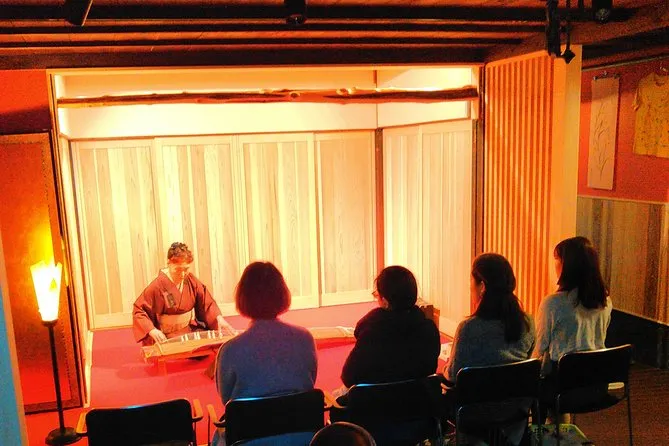
Photo: intimate Japanese performance small venue audience connection, via tokyo-top-guide.com
There's a particular kind of loneliness that doesn't look like loneliness from the outside. You've got a full Instagram feed, a group chat that never stops pinging, maybe even a solid social calendar. And yet — something's missing. A realness. A stillness. A sense that someone, somewhere, is actually present with you.
Japanese artists figured this out before most Western creators even had a name for it. And now, in 2024, they're quietly building some of the most devoted audiences in American entertainment — not through spectacle or scale, but through something almost counterintuitive: deliberate intimacy.
The Numbers Behind the Quiet
Let's start with a stat that should make every major US entertainment exec put down their coffee. According to a 2023 Surgeon General advisory, loneliness affects roughly half of American adults — and that number climbed steeply during and after the pandemic years. Younger generations, particularly Gen Z and younger millennials, report feeling more disconnected than any previous cohort despite being the most digitally connected people in history.
Into that gap stepped a wave of Japanese content creators and performers who built their entire artistic identity around the idea of being with an audience rather than performing at them. The results have been striking.
Japanese ASMR creators on YouTube and streaming platforms like Niconico have found massive crossover success with American viewers, often pulling millions of views on videos that are, by traditional entertainment logic, doing almost nothing. Soft sounds. Quiet voices. Long pauses. No narrative arc. No punchline. Just presence.
What ASMR Taught Us About What We Actually Want
ASMR — that tingly, calming sensation triggered by soft sounds and close audio — became a global phenomenon, but Japan's approach to it carries a cultural specificity that sets it apart. Japanese creators often frame their content around omotenashi, a concept of wholehearted hospitality where the host anticipates and meets every need of the guest before it's even expressed.
In practice, this means a Japanese ASMR artist isn't just making nice sounds. They're crafting an experience where the viewer feels genuinely cared for. Roleplay scenarios where you're a customer at a quiet tea house. A late-night study companion who occasionally checks in to make sure you're okay. A soft-spoken artist who makes you feel like you're sitting in the same room.
For American viewers who grew up on loud, fast, high-stimulation media, this is almost jarring in how effective it is. It works because it's different. Because it asks nothing of you. Because it gives without demanding engagement in return.
Intimate Venues as Emotional Architecture
Beyond digital content, Japanese performance culture has been quietly influencing a shift in how live shows are structured for American audiences. The traditional model — bigger venue, bigger production, bigger everything — is getting challenged by a growing appetite for something more human-scaled.
Artists and performance companies drawing from Japanese theater traditions like rakugo (solo comedic storytelling) or butoh (deeply introspective physical performance) have found that Americans are increasingly willing to pay a premium for shows held in rooms that seat fifty people or fewer. The intimacy isn't a limitation. It's the product.
When you're twenty feet from a performer who is genuinely there — no pyrotechnics, no hype, just a human being doing something extraordinary up close — the experience becomes almost uncomfortably personal. You feel witnessed by proxy. You feel like you matter to the show in a way that sitting in row J of a 3,000-seat theater never quite delivers.
Several US-based venues in cities like Brooklyn, Portland, and Chicago have started deliberately programming Japanese-influenced intimate performance formats, and waitlists for these events routinely outpace capacity. The demand is real.
Parasocial Relationships, Japanese Style
Then there's the phenomenon of parasocial connection — that one-sided emotional relationship audiences form with creators or performers they've never met. This is nothing new in entertainment. Fans have always loved celebrities. But Japanese idol culture has refined and monetized parasocial dynamics in ways that are now being studied and, in some cases, replicated by American content creators.
The Japanese idol model is built on accessibility theater — the careful construction of a performer who feels reachable, relatable, and personally invested in each fan, even when they're managing audiences of millions. Fan meet-and-greets where you get thirty seconds of eye contact and a handshake become transformative experiences precisely because the system has been engineered to make them feel meaningful.
American creators and platforms are starting to borrow heavily from this playbook. Exclusive Discord communities, personalized video messages, tiered Patreon memberships that promise "real" access — these are all variations on a model Japan's entertainment industry perfected decades ago.
The difference is that Japanese artists often bring a sincerity to the performance of vulnerability that American audiences find disarming. There's less ironic distance. Less of the protective layer of cool. Japanese creators who share loneliness, uncertainty, or quiet struggle tend to do so with a directness that hits differently — and that directness is exactly what isolated American audiences are hungry for.
What This Trend Actually Reveals
It would be easy to frame all of this as a business story — Japanese artists identifying a market gap and filling it. And sure, there's money involved. The loneliness economy is real, and smart creators are building sustainable careers by offering connection as a product.
But there's something more interesting happening underneath the economics. American audiences gravitating toward Japanese performance styles that prioritize stillness, intimacy, and emotional honesty are essentially voting with their attention for a different kind of entertainment relationship. One that doesn't ask you to perform your own enjoyment back at the content. One that sits quietly beside you rather than demanding you sit quietly and watch.
In a media landscape that's gotten progressively louder, faster, and more algorithmically optimized for maximum stimulation, the Japanese artistic tradition of ma — that intentional, meaningful empty space — turns out to be genuinely radical.
The Road Ahead
This isn't a niche trend anymore. The crossover between Japanese performance philosophy and American audience needs is moving from the margins toward something that looks increasingly like a mainstream shift. Streaming platforms are investing in Japanese-origin content at record levels. Intimate venue experiences are selling out in cities that would have laughed at the concept five years ago. And the creators who built audiences on the premise of quiet, genuine connection are proving that sustainability in entertainment doesn't always require scale.
For American audiences navigating a genuine crisis of disconnection, Japanese artists aren't just offering entertainment. They're offering something that feels, in the moment, a little like being understood. And in 2024, that might be the most valuable thing anyone can sell.