Less Is Everything: Why Japan's Quiet Performance Philosophy Is Winning Over Western Crowds
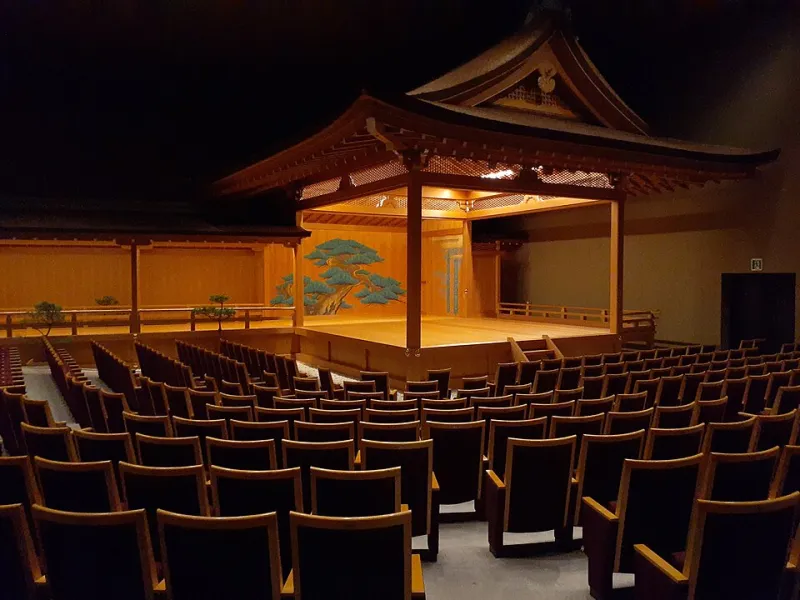
Photo: J. Cuatrocasas, CC BY-SA 4.0, via Wikimedia Commons
There's a moment in a Noh performance that first-timers often describe the same way. The performer barely moves. Maybe a slow tilt of the head, a hand raised a few inches, a breath that seems to take forever. And somehow — somehow — you can't look away. If you've ever sat in that kind of silence and felt your pulse quicken, you already understand what Japanese minimalism in performance does to a person. You just might not have had the words for it yet.
That wordless pull is starting to show up in places far removed from traditional Japanese stages. It's in the way certain Broadway directors are rethinking blocking. It's in the stripped-down concert performances going viral on social media. It's in the growing number of American acting coaches who are telling their students to stop doing so much. The influence is real, it's spreading, and it traces back to an artistic philosophy that Japan has been refining for over six hundred years.
What Noh Theater Actually Teaches Us About Attention
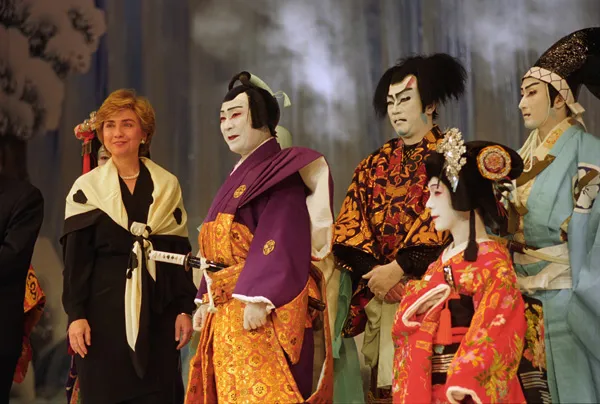
Noh theater is old. We're talking 14th century old. It was developed during Japan's Muromachi period, codified by a father-and-son duo named Kan'ami and Zeami, and it has changed remarkably little since then. The masks, the layered silk costumes, the near-glacial pacing — all of it is intentional and precise.
But here's the thing that gets lost in Western descriptions of Noh: it isn't slow because it's boring. It's slow because slowness is the point. Zeami wrote extensively about a concept called yugen — a kind of profound, mysterious beauty that exists beneath the surface of things. The idea is that if a performer shows you everything, you receive everything passively. But if a performer withholds, your imagination fills the gap. And what your imagination creates is always more powerful than what any stage production can deliver.
That's the psychological engine underneath Japanese minimalist performance. It doesn't give you less — it gives your brain more room to work.
The Western Spectacle Problem
American entertainment has long operated on a different assumption: bigger is better, louder lands harder, and if something is worth feeling, it's worth feeling at maximum volume. Broadway megamusicals with flying chandeliers, stadium concerts with pyrotechnics, action movies where the climax involves at least one explosion per minute — these aren't accidents. They're the result of a cultural belief that audiences need to be overwhelmed to be engaged.
And for a long time, that worked. But something has been shifting, particularly among younger audiences. Gen Z viewers, raised on everything from lo-fi YouTube channels to the meditative pacing of certain K-drama and anime series, have developed a different kind of attention. They're not bored by stillness. They're actually drawn to it.
Research in performance psychology backs this up. Studies on audience engagement have found that anticipation — the gap between a setup and a payoff — is neurologically more activating than the payoff itself. When a performer holds a beat, when a scene breathes instead of rushes, when silence is treated as content rather than dead air, audiences don't tune out. They tune in harder.
Contemporary Artists Carrying the Torch
You don't have to look far to find artists who've absorbed this philosophy and translated it for modern audiences.
Takashi Soma, a Japanese contemporary theater director who has worked in both Tokyo and New York, has spoken openly about building productions around what he calls "negative space in time" — essentially, structured silence that the audience inhabits rather than endures. His productions have drawn comparisons to Beckett, but Soma is clear that his primary influences are rooted in Noh and Butoh, Japan's postwar avant-garde dance form that weaponizes slowness in a completely different way.
On the music side, artists like Ryuichi Sakamoto — whose work spanned decades before his passing in 2023 — demonstrated to Western listeners that a single sustained note, properly placed, carries more emotional weight than a wall of sound. Sakamoto's influence on ambient and minimalist composers in the US has been enormous, and his approach was always fundamentally Japanese in its restraint.
Even in pop performance spaces, you can see the shift. Artists who strip back choreography, who let a song breathe, who use stillness as a dramatic tool rather than a gap to fill — they're often the ones generating the most intense audience reactions online.
What American Directors Are Learning
The borrowing is happening consciously now. Theater directors like Anne Bogart, who co-developed the Viewpoints technique for actor training, have long cited Japanese performance traditions as central influences. Viewpoints directly incorporates concepts of spatial awareness, tempo, and duration that feel distinctly rooted in the Japanese understanding of ma — the meaningful pause, the productive emptiness between actions.
Acting teachers in New York and LA are increasingly pushing back against the "indicate everything" school of performance. The note "you're doing too much" has become almost a mantra in certain studio spaces. And when you ask where that philosophy comes from, the answers often circle back to the same source: a tradition that decided, centuries ago, that the most powerful thing a performer can do is make you wonder what they're about to do next.
Why This Matters Right Now
There's something culturally timely about all of this. We live in an era of relentless stimulation — notifications, autoplay, infinite scroll. The entertainment industry's instinct has been to match that pace, to compete for attention by escalating sensation. But a growing segment of audiences is exhausted by that arms race. They're craving something that respects their attention instead of fighting for it.
Japanese minimalism in performance offers exactly that. It doesn't chase you. It waits. And in waiting, it earns something that spectacle never quite can — genuine, unhurried focus.
For performers and directors willing to embrace the discomfort of doing less, the rewards are real. Audiences remember stillness. They carry it home with them. They talk about it.
A chandelier falling from the ceiling is impressive. A performer who can hold a room with a single, barely perceptible gesture? That's something else entirely. That's the kind of thing that stays with you.
And if you've been following what's happening at the intersection of Japanese artistry and Western performance right now, you already know — that quieter power is having a very loud moment.