Why Japan's Greatest Artists Never Finish Their Work — And Why That's the Whole Point
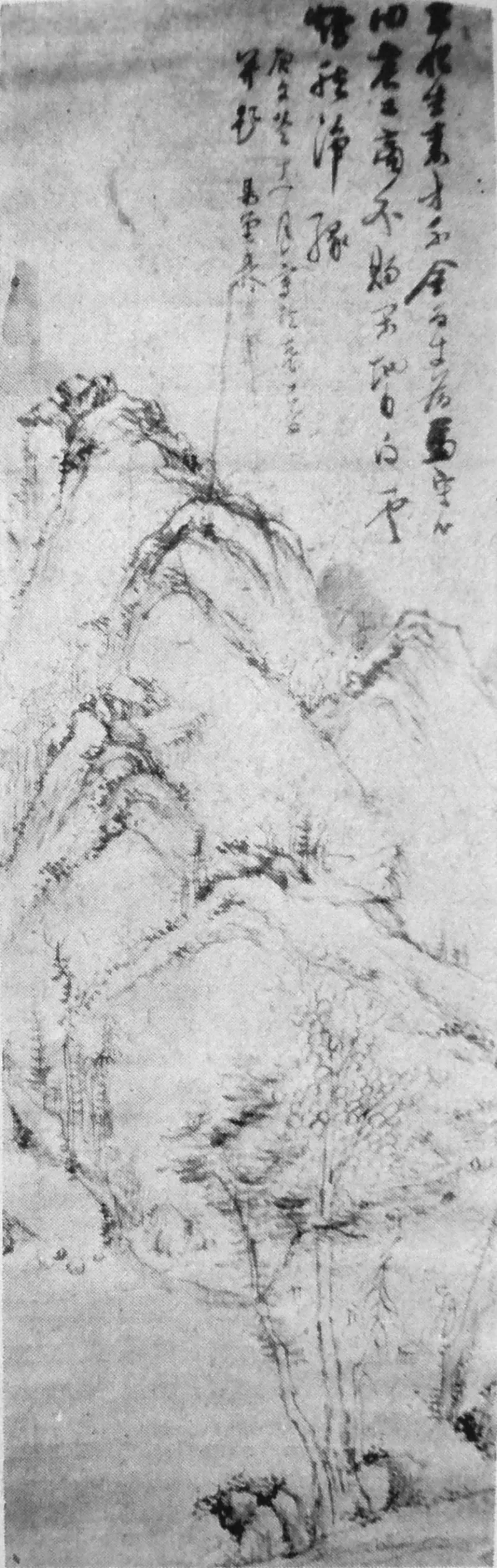
Photo: Teranishi Ekidou, Public domain, via Wikimedia Commons
Let's be honest. American culture has a serious finishing problem. Not in the sense that we can't complete things — we're actually obsessed with completion. We want polished albums, tight film edits, flawless opening nights, and Instagram posts that look like they were art-directed by a team of ten. The pressure to deliver something fully realized, totally buttoned-up, and ready for mass consumption is baked into pretty much every creative industry this country has.
But over in Japan, some of the most celebrated artists are doing something that would make a Hollywood producer break out in hives: they're deliberately leaving their work unfinished.
And audiences love them for it.
What 'Seiza no Kokoro' Actually Means
The phrase seiza no kokoro — loosely translated as "the heart of incompleteness" — isn't exactly a household term in the US, but the idea behind it has been quietly shaping Japanese artistic tradition for centuries. It's the belief that a work of art doesn't have to be whole to be powerful. In fact, leaving deliberate gaps, unresolved tensions, or open-ended narratives can make a piece more resonant, not less.
Think of it like this: when a story wraps up too neatly, the audience walks away satisfied but passive. When something is left slightly open — a question unanswered, an emotion unnamed, a scene that fades before the resolution — the audience has to lean in. They bring themselves to the work. They fill the gap with their own experience, their own grief, their own hope.
That's not a bug. That's the whole design.
This philosophy shows up across Japanese art forms — in the spare, suggestive brushstrokes of sumi-e ink painting, in the pregnant silences of Noh theater, in the way a haiku cuts off just before you expect the thought to land. The incompleteness isn't carelessness. It's craft.
The Western Obsession With the Finished Product
Contrast that with how creative success tends to get measured in America. A musician drops an album and it gets reviewed based on how cohesive it sounds, how well-produced it is, how completely it delivers on its promise. A playwright's work gets judged on whether the third act sticks the landing. Even in the indie space, where "raw" and "authentic" are supposedly valued, there's still enormous pressure to package the rawness into something that feels intentional and complete.
This obsession with the finished product creates a very specific kind of anxiety. Creators hold things back for years, waiting until something is "ready." They over-polish until the original spark is gone. They kill projects before they start because they can already see the gap between what they imagine and what they'll actually be able to execute.
The Japanese have a word for the beauty found in imperfection and transience — wabi-sabi — and while that concept has made some inroads in American design circles, its deeper creative implications haven't really landed yet. We've adopted the aesthetic without absorbing the philosophy.
What Performers Can Actually Learn From This
Here's where it gets really interesting for anyone working in performance — theater, music, dance, spoken word, whatever your arena is.
Japanese Butoh dancers, for example, often describe their performances as incomplete transformations. They're not trying to become something fully on stage — they're inhabiting the in-between state, the moment of becoming, and inviting the audience to witness a process rather than a product. That vulnerability, that sense of watching something still in motion, creates an intimacy that a polished, finished performance sometimes can't.
Noh theater takes this even further. The masks, the slow movement, the sparse text — everything is designed to leave interpretive space. Two people watching the same Noh performance can walk away having experienced completely different emotional stories, because the form is built to hold multiple meanings at once. The actor doesn't impose a singular reading. They offer a space.
Now imagine bringing that energy to an American stage. Instead of over-explaining, you trust the audience. Instead of tying every emotional thread, you let one hang. Instead of performing certainty, you perform the search.
Some of the most talked-about American performers are already doing this intuitively — think of the way certain artists build cult followings by releasing music that feels unfinished, or how immersive theater experiences that leave audiences without clear answers tend to generate the most intense word-of-mouth. The appetite is there. The philosophical framework, though, is still catching up.
How to Actually Use This Without Just Making Sloppy Work
Okay, real talk — there's a difference between intentional incompleteness and just not finishing your homework. The seiza no kokoro approach requires just as much skill and intention as any polished final product. Maybe more, actually, because you have to know exactly where to stop.
A few ways to start experimenting with this in your own creative practice:
End earlier than you think you should. Whether it's a performance, a piece of writing, or a visual work, try cutting it before the expected conclusion. See what happens when you trust your audience to close the loop.
Leave one question unanswered. In storytelling, this is the difference between a twist and a mystery. Twists resolve; mysteries linger. The lingering is where the audience relationship deepens.
Share works-in-progress with intention. Not because you're being lazy, but because inviting people into the process — the messy, uncertain middle of a creative journey — builds a different kind of loyalty than dropping a finished product ever will. Your audience becomes collaborators, not just consumers.
Resist the urge to explain. Japanese artists rarely over-contextualize their work. They present it and step back. The silence after the performance is part of the performance. Practice that. It's harder than it sounds.
The Pressure Release You Didn't Know You Needed
Here's the thing nobody tells you about embracing incompleteness: it's not just an artistic choice. It's also a sanity-saving one.
The paralysis that kills creative projects before they start almost always comes from the same place — the belief that it has to be perfect before it can be real. That belief is a trap, and it's a very Western one. When you absorb the idea that incompleteness can be a feature rather than a flaw, the whole equation shifts. You start making things again. You share them sooner. You stop waiting for a version of yourself that's ready, because you understand that the in-between version — the one still figuring it out — has something real to offer too.
Japanese artists have known this for a long time. The rest of us are just starting to catch on.
And honestly? That feels like exactly the right moment to start paying attention.