Second String, First Rate: What Japan's Understudy Culture Teaches Us About Thriving Under Pressure
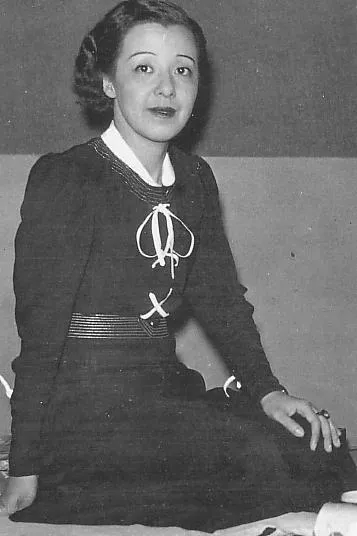
Photo: Unknown authorUnknown author, Public domain, via Wikimedia Commons
There's a moment every theater lover knows. The house lights dim, the stage manager steps to the microphone, and a ripple of disappointment moves through the audience when they hear those words: "The role of [lead performer] will tonight be played by..." In most American theaters, that announcement lands like a minor tragedy. People groan. Some ask for refunds. The understudy walks out carrying the invisible weight of being nobody's first choice.
Japan thinks that's a deeply strange way to run a theater.
The Understudy as an Art Form in Itself
In traditional Japanese performing arts — from Noh and Kabuki to contemporary theatrical companies in Tokyo and Osaka — the concept of the backup performer carries an entirely different cultural charge. The word hikae, loosely translated as "the one who waits in reserve," has never been a polite way of saying "less important." Historically, it described a performer whose preparation was so thorough, so obsessively complete, that they could step into any role at any moment without losing a single thread of the production's integrity.
That's not a safety net. That's a parallel form of mastery.
Kabuki families, in particular, have long trained understudies with the same ferocity as their leads. The reasoning is practical and philosophical at once: a production is only as strong as its most prepared performer, not its most celebrated one. When everyone on the roster has internalized every nuance of every role, the ensemble itself becomes unbreakable. The star might draw the crowd, but the culture is built from the bottom up.
Why Western Theater Got It Backwards
Broadway has a different story to tell. The American theatrical hierarchy has historically placed understudies in a strange professional purgatory — essential enough to hire, overlooked enough to ignore until disaster strikes. They sit through hundreds of performances they'll rarely appear in, paid less, rehearsed separately, and introduced to audiences mostly when something has gone wrong.
The psychological toll of that framing is real. When your entire identity within a production is defined by someone else's absence, it's hard to build the kind of quiet, confident readiness that transforms a debut into a revelation. Instead, many understudies spend their time managing anxiety rather than sharpening their craft. The pressure becomes about not failing rather than genuinely performing.
And yet — and this is the part American theater keeps accidentally discovering — some of the most electric performances in Broadway history have come from understudies who walked on with nothing to lose and everything to prove. Jennifer Holliday's legendary early performances in Dreamgirls. Sutton Foster's breakout in Thoroughly Modern Millie. The understudy stepping up isn't a backup plan. It's occasionally the whole show.
The Japanese Reframe: Readiness as Identity
What separates the Japanese theatrical approach isn't just technique — it's the story performers tell themselves about what their role actually means. When a young actor in a traditional Noh company spends years watching and absorbing the lead's every movement, they're not waiting for failure. They're accumulating something. That accumulation becomes its own source of confidence.
Rio Matsumoto's own observations from studying Japanese performance traditions point to something fascinating here: the performers who thrive in these understudy roles aren't the ones who suppress their nerves. They're the ones who have practiced so deeply that nerves become irrelevant. The preparation is so thorough that the body simply knows what to do, even when the mind is spinning.
That's a fundamentally different relationship with pressure. Rather than pressure being a threat, it becomes a signal that the moment you've been quietly building toward has finally arrived.
What American Artists Are Starting to Adopt
Something is shifting in the way American performers talk about secondary roles, and it's not subtle. Across theater programs, acting coaches, and industry conversations in cities like New York and LA, there's a growing interest in reframing the understudy experience as a form of elite preparation rather than professional consolation.
Some companies are borrowing directly from Japanese ensemble models, rotating performers through multiple roles during rehearsal so that no single performer holds a monopoly on any character. The result is a cast that understands the production from every angle — and individuals who are dramatically harder to rattle when circumstances change.
Acting coaches who work with performers on resilience and stage confidence are increasingly drawing on the Japanese concept of shu-ha-ri — a learning framework that moves from strict imitation, to breaking with convention, to transcending it entirely. For understudies, the first phase (watching and absorbing with radical precision) is something they do more thoroughly than almost anyone else in the cast. The question is whether the culture around them treats that phase as valuable or invisible.
The Breakthrough Moment, Reframed
Here's what actually happens when an understudy who has trained with this mindset finally steps on stage: they don't perform despite the pressure. They perform through it, fueled by every hour of invisible preparation that nobody in the audience knows about.
That's not luck. That's a system working exactly as designed.
Japanese theater has understood for centuries that the most dangerous performer in the room isn't always the one whose name is on the marquee. It's the one who has been watching, absorbing, and quietly building for years without anyone paying much attention. When the spotlight finally finds them, they're not scrambling to catch up. They've already been there a thousand times in their own mind.
For American performers still fighting against the stigma of the second slot, that reframe is genuinely liberating. The understudy isn't the understudy because they're less talented. In many cases, they're the understudy because the system hasn't caught up to what they're actually capable of yet.
The Bigger Lesson for Creative Careers
This extends well beyond theater. In any creative field — dance, music, film, even visual art — there are people in supporting positions who are quietly out-preparing everyone above them. The Japanese performing arts tradition offers a powerful reminder that the hierarchy of recognition and the hierarchy of readiness are not the same thing.
Building a career with that awareness changes everything. You stop waiting for permission to be excellent. You stop defining your value by the size of your current role. You start treating every moment of preparation — seen or unseen, credited or not — as the real work.
And when the moment finally comes? You're not hoping you're ready. You already know.