Slow Down to Level Up: How Japan's Ancient Mentorship Model Is Saving American Creatives from Burnout
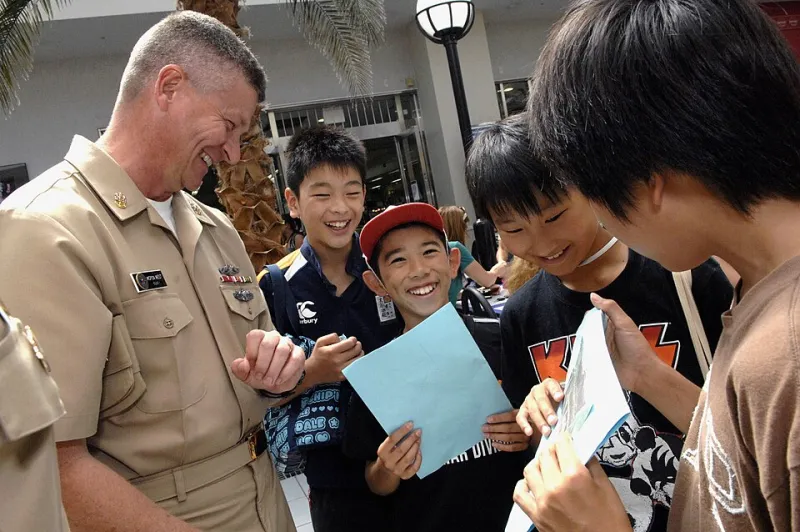
Photo: U.S. Navy photo by Mass Communication Specialist 1st Class Jennifer A. Villalovos, Public domain, via Wikimedia Commons
There's a moment that Brooklyn-based choreographer Dana Reyes describes as her "breaking point." She'd just finished her fourth online masterclass in two months — a $400 course on contemporary movement, taught by someone she'd never actually watched perform live. She had a certificate. She had notes. She had absolutely no idea what to do next.
"I kept consuming," she says. "But nothing was sticking. I wasn't growing. I was just... collecting information and feeling worse about myself."
That frustration eventually led her to something she hadn't expected: a formal mentorship with a Japanese butoh artist based in Los Angeles, structured around the traditional senpai-kohai model — a hierarchical but deeply personal apprenticeship framework that's been central to Japanese artistic and professional culture for centuries. Two years later, she says it changed everything.
She's not alone.
What Even Is Senpai-Kohai?
If your only reference for "senpai" is anime memes, it's worth slowing down for a second. The senpai-kohai dynamic is a formalized relationship between a senior practitioner (senpai) and a junior one (kohai) that goes far beyond simple instruction. It's less about information transfer and more about identity formation.
In traditional Japanese arts — kabuki, noh theater, ikebana, martial arts — a student doesn't just learn techniques from a master. They observe, assist, absorb, and gradually earn the right to practice. The timeline is measured in years, sometimes decades. There's no graduation certificate. Progress is recognized by the master when the master decides it's been earned.
This might sound rigid, even uncomfortable, to American ears trained on the language of self-directed learning and personal empowerment. But that discomfort is increasingly being reframed as the point.
Why Hustle Culture Left a Hole
The timing here matters. American creative culture spent most of the 2010s worshipping at the altar of speed — ship fast, fail fast, learn fast, grow fast. The internet made expertise feel accessible and democratized, which was genuinely exciting for a while. Anyone could learn anything from anyone, anywhere, for a monthly subscription fee.
But somewhere along the way, accessibility started to feel hollow. A generation of creatives found themselves technically informed but experientially empty. They knew the vocabulary of their craft but hadn't lived inside it long enough to develop instinct. They had followers but no real mentors. They had content but not depth.
Cultural consultant James Okafor, who works with performing arts organizations across the US, puts it plainly: "We built an education system for creatives that optimized for speed and forgot entirely about wisdom. And wisdom doesn't compress."
The senpai-kohai model is, in many ways, the structural opposite of that approach. It is deliberately slow. It demands patience. It requires the student to sometimes spend months doing what looks like nothing — watching, cleaning, assisting — before being trusted with direct instruction.
The Accountability Nobody Talks About
One of the less-discussed aspects of this model is what it does to accountability. In a self-directed learning environment, you're essentially accountable to yourself — which sounds great until you realize that you're also the person most likely to let yourself off the hook.
The senpai-kohai relationship changes that equation entirely. When someone has invested real time and reputation in your development, the stakes feel different. You show up differently. You pay attention differently.
Naomi Watkins, a textile artist in Portland who spent three years studying under a Japanese indigo dyeing specialist, describes it as "a kind of productive pressure I'd never felt before." Her mentor, she explains, rarely gave direct praise. Progress was communicated through being trusted with more complex tasks. "You had to learn to read the relationship," she says. "That itself taught me something huge about how to pay attention."
This is actually well-documented in Japanese performance traditions. In kabuki, for example, young performers spend years in supporting roles before being considered for lead parts — not because they lack talent, but because the tradition holds that full artistic maturity requires full experiential immersion. The role comes when the person is ready for it, not when they feel ready for it.
Cross-Cultural Complications (And Why They're Worth It)
Adopting a framework from another culture is never frictionless, and it's worth being honest about that. The senpai-kohai model emerged in a specific social and cultural context — one that includes hierarchies and deference structures that don't always translate cleanly into American creative spaces, which tend to prize egalitarianism and direct communication.
Some practitioners working across both cultures are actively rethinking how to adapt the model without flattening it. Hiroshi Tanaka, a Japanese theater director now based in Chicago who mentors both American and Japanese performers, says the core of what he tries to preserve is the "long view."
"American students want to know when they'll be ready," he says with a laugh. "That question itself tells me they're not ready yet. Not because they're bad students — because they haven't learned to stop measuring time that way. That shift is the first real lesson."
He's also careful to adapt the relational dynamics. "In Japan, the hierarchy is very clear and rarely questioned. Here, I find I need to explain the 'why' more often. That's not a weakness in the model. It's just a different application of the same principles."
What This Looks Like in Practice
For American creatives curious about this model, the entry points are more accessible than they might seem. Japanese cultural centers in cities like New York, Los Angeles, San Francisco, and Chicago often serve as connective tissue between traditional practitioners and Western students. Performing arts organizations with Japanese programming — think theater companies, dance collectives, even fashion ateliers — increasingly offer structured mentorship tracks that draw from this tradition.
It's also worth noting that the model doesn't require a Japanese mentor. The principles — long-term commitment, reciprocal relationship, earned trust, patient observation — can be applied in any mentorship context. What matters is the orientation: slow, relational, and grounded in genuine craft rather than content consumption.
Dana Reyes, the choreographer from Brooklyn, now informally mentors two younger dancers herself. She's built the relationship deliberately, she says, in the image of what she experienced. "I'm not trying to recreate Japan in Brooklyn," she laughs. "But I'm trying to recreate the feeling — that someone is actually watching you grow, over time, and that it matters to them."
The Deeper Offer
Maybe what's really driving the interest in this model isn't just disillusionment with online courses. Maybe it's something lonelier and more fundamental: a hunger for someone who actually knows you as an artist, across time, with stakes in your development.
In a creative economy that often feels transactional — followers, streams, likes, gigs — the senpai-kohai relationship offers something almost countercultural. It says: your growth is worth sustained attention. You are worth the long game.
For a generation of American creatives who've been told to move fast and break things, that might just be the most radical idea of all.