Walking Away at the Top: The Japanese Artist's Quiet Refusal to Cash In
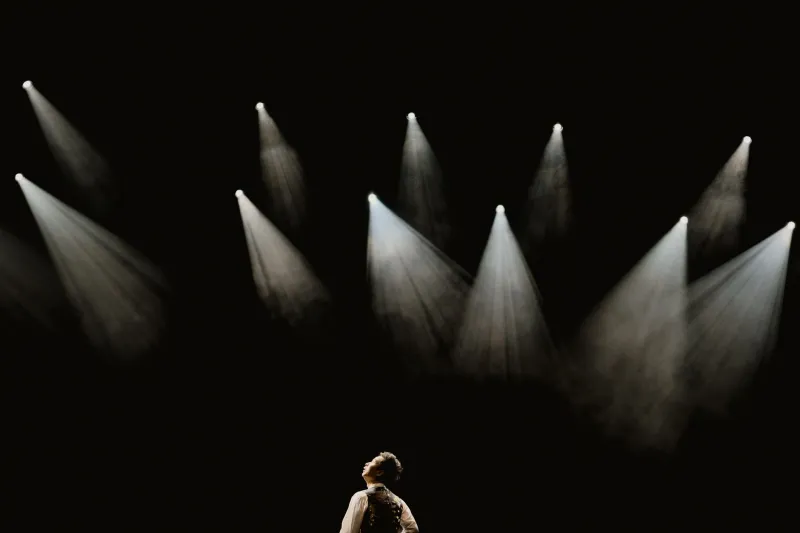
Imagine selling out Madison Square Garden three nights in a row. Your face is on every magazine. Streaming numbers are breaking records. Your manager is fielding calls from sponsors you used to dream about. And then you announce — nothing. No tour extension. No greatest hits compilation. No victory lap. Just a quiet pivot toward something nobody asked for and nobody expected.
In America, that move reads as career suicide. In Japan, it often reads as the highest form of artistic integrity.
This is one of the more quietly fascinating cultural gaps between Japanese and Western entertainment, and it shows up again and again if you know where to look. Japanese performers — across music, theater, dance, and visual art — have a documented pattern of walking away from guaranteed success at the exact moment it becomes most accessible. Understanding why they do it says something profound about the difference between building a legacy and chasing fame.
The Concept of Ma and Why It Applies to Careers, Not Just Music
Most people who've dipped into Japanese aesthetics have heard of ma — the concept of meaningful negative space, the pause that gives sound its weight. Musicians and theater practitioners talk about it constantly. But fewer people consider that Japanese artists sometimes apply this same logic to the architecture of their entire careers.
A gap isn't emptiness. It's structure. It's what makes the next thing land harder.
When a Japanese performer steps back from a peak moment, they're often not retreating — they're creating ma on a macro scale. The silence between achievements isn't wasted time. It's the breath before the phrase. And in a culture where artistic credibility is measured across decades rather than quarterly earnings, that breath is considered essential.
This stands in sharp contrast to the American entertainment model, where momentum is sacred. Miss a cycle, and the conventional wisdom says the algorithm forgets you, the press moves on, and the audience drifts. Capitalize while you're hot. That's the operating logic.
Japanese artistic culture, particularly in traditional and theatrical contexts, runs on a different clock entirely.
Case in Point: The Kabuki Tradition of Strategic Disappearance
Within kabuki theater, there's a long-standing practice tied to the concept of shu-ha-ri — a progression through mastery that demands an artist break from their established form before they can truly transcend it. The most celebrated kabuki performers in history didn't simply repeat their greatest roles until audiences stopped coming. They reached a point of mastery and then deliberately complicated their relationship with that mastery.
Some withdrew from signature roles at the height of their popularity, citing a need to study forms they hadn't yet absorbed. Others took years-long sabbaticals to pursue completely unrelated disciplines — calligraphy, ceramics, poetry — returning to the stage transformed in ways that audiences couldn't quite articulate but could absolutely feel.
From a Western commercial standpoint, this looks like leaving money on the table. From within the tradition, it looks like the only logical next step.
The Pop World Parallel: When J-Pop Stars Refuse to Repeat Themselves
This pattern isn't limited to the classical arts. It shows up in Japanese pop culture in ways that consistently baffle Western entertainment journalists.
Several of Japan's most commercially successful musical acts have, at their commercial peaks, announced hiatuses, disbanded entirely, or released follow-up albums so stylistically removed from what made them famous that they functionally ended their own momentum. The response from fans is often complicated — grief, confusion, even anger — but rarely the kind of industry-wide condemnation you'd expect in the US.
Because in Japan, there's a cultural vocabulary for this choice. It doesn't read as arrogance or self-sabotage. It reads as an artist taking their craft seriously enough to refuse the comfortable repetition that commercial success demands.
The Western equivalent might be Radiohead releasing Kid A after OK Computer — an act of deliberate creative disruption that cost them mainstream radio play and baffled casual fans, but ultimately deepened their artistic credibility in ways that outlasted the moment. Except in Japan, that kind of move is less of an outlier. It's closer to an expectation.
What It Costs — And What It Buys
Let's be honest about the trade-off, because there absolutely is one.
Japanese artists who walk away from peak moments frequently pay real commercial prices. Sponsorships evaporate. Younger audiences, raised on algorithmic discovery, may never circle back. The entertainment industry in Japan — particularly the idol system and major label infrastructure — can be just as punishing as anything in Hollywood when an artist disrupts the expected trajectory.
Some artists who made these choices in their thirties and forties spent years rebuilding audiences from scratch. Some never fully recovered their commercial footing. A few disappeared into critical obscurity, celebrated in retrospectives but forgotten in the mainstream.
And yet, among Japanese audiences with longer cultural memories, the artists who made these choices often carry a different kind of weight. Not the weight of popularity, but the weight of seriousness. The sense that they were doing something that mattered to them beyond the transaction — and that this mattered.
In America, we have a word for this too: integrity. We just don't always reward it financially.
Legacy vs. Fame — The Core Distinction
Here's the thing that keeps coming back when you sit with this long enough: the Japanese artistic tradition, particularly in performance, has always made a clearer distinction between fame and legacy than Western entertainment culture typically does.
Fame is loud. Fame is now. Fame is the sold-out run and the magazine cover and the streaming spike. Legacy is quieter. Legacy is what survives the algorithm, what gets taught in studios decades later, what younger artists cite when they're trying to explain why they do what they do.
Japanese performers who walk away at the top aren't rejecting success. They're choosing which kind of success they're building toward. And they're willing to absorb significant short-term cost to do it.
For American creatives watching from the outside, there's something genuinely uncomfortable about this — because it holds up a mirror to the way we're conditioned to think about artistic careers as revenue curves rather than long arcs of meaning.
The Question Worth Asking
None of this is an argument that American performers should start turning down their victory laps. The cultural context is different, the industry structures are different, and there's nothing inherently noble about leaving money on the table if it just means struggling unnecessarily.
But the Japanese model does ask a question worth sitting with: What are you building, exactly?
If the answer is a body of work that means something — that pushes somewhere, that doesn't just replicate the last thing that worked — then maybe the encore isn't always the point. Maybe sometimes the most powerful move is the one that refuses to repeat itself.
Japanese artists have been making that argument with their careers for centuries. The rest of the world is just starting to pay attention.